
If you are thinking about a professional home cinema installation, one of the first questions you will probably ask is whether your room is actually suitable in the first place.
It’s a fair concern.
A lot of people assume a dedicated home cinema only works in a huge basement or a purpose-built extension with perfect proportions and no windows. So if the space you have is a spare room, converted garage, loft room or an awkward extra room, it is easy to think it might not be worth pursuing.
In reality, plenty of rooms can work brilliantly as dedicated home cinemas. The key is not whether the room is perfect. It is whether the space can be designed in the right way to give you the kind of experience you want.
That comes down to a few practical things: room shape, ceiling height, acoustics, light control and layout.
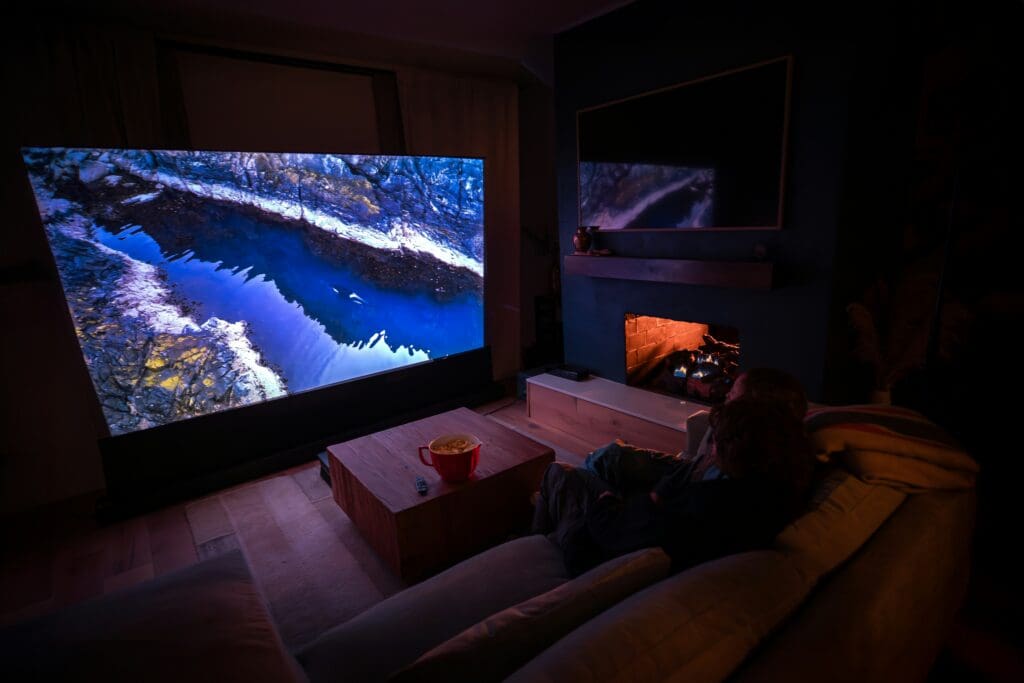
First, forget the idea that bigger automatically means better
One of the biggest myths around home cinema is that you need a huge room for it to feel impressive.
You do not.
A well-designed cinema in a modest-sized room will usually feel far more immersive than a larger room that has been poorly planned. The real question is not “Is the room big?” but:
Can this room comfortably support the screen, seating, sound and lighting needed for a proper cinema experience?
That means looking at things like:
- room shape
- seating distance
- ceiling height
- acoustics
- light control
- speaker placement
So even if your room does not look spectacular on paper, it may still be a very strong candidate.
Room shape matters more than most people expect
In general, rectangular rooms are the easiest rooms to work with for dedicated cinema design.
Why? Because they tend to make everything simpler:
- the screen has a natural wall to sit on
- seating can be centred properly
- speakers can be positioned more evenly
- the sound behaves more predictably
That does not mean other room shapes are impossible. It just means they may need a bit more planning.
For example, rooms can become trickier if they have:
- large open sides
- lots of glazing
- awkward alcoves
- sloped ceilings
- off-centre doors
- unusual proportions
None of these automatically rule a room out. They simply affect how the design needs to be approached.
So if your room feels slightly awkward, do not write it off too quickly. Many rooms that seem less than ideal at first can still become excellent home cinemas with the right layout and treatment.
Is the room big enough?
This is usually the next concern.
People often ask for a minimum room size, but there is no one magic number that decides whether a room works or not.
What matters more is whether you can create a comfortable relationship between:
- the screen size
- the main seating position
- the speaker layout
- the circulation space around it all
A smaller room can still feel fantastic if it gives you:
- a good viewing distance from screen to seat
- space for the front speakers to perform properly
- enough room so the seating does not feel cramped
- sensible access in and out of the room
In fact, a cosy, properly designed cinema room can feel incredibly immersive because everything is focused on the experience. You are not trying to make it do five different jobs. You are creating one room that does one thing brilliantly.
That said, if the room is extremely narrow, very shallow, or so tight that the seats would need to be pushed hard against the back wall, then compromises start to show.
The aim is not just to “fit it in”. The aim is to make it feel deliberate.
Ceiling height can make a bigger difference than people realise
Floor space is important, but ceiling height is often the hidden factor.
Why? Because it affects several things at once:
- how spacious the room feels
- how well overhead sound can work
- whether a second row of seating is realistic
- how lighting and detailing can be integrated
- how balanced the room feels overall
If you are hoping for a really cinematic experience, ceiling height helps give the room a sense of scale. It also gives more flexibility for speaker placement, especially if you want immersive surround formats.
A lower ceiling does not mean the room is unsuitable. It just means the design has to respond to that limitation carefully. The system may need to be scaled differently, and some features may be less practical than they would be in a taller room.
So rather than asking “Is my ceiling high enough?”, it is better to ask:
What kind of cinema experience can this ceiling height support well?
That is a much more useful way of looking at it.
Acoustics are often the thing people overlook
This is where many homeowners get caught out.
A room can look ideal on first inspection, but if it is full of hard surfaces, bare walls and reflective finishes, it may never sound as cinematic as it should without acoustic treatment.
And sound is a huge part of what makes a home cinema feel special.
When acoustics are poor, you notice things like:
- muddy dialogue
- harsh or tiring sound
- echo
- overblown bass
- a lack of clarity and precision
It is not just about loudness. It is about control.
Rooms that are easier to work with acoustically tend to offer space for treatments to be integrated without the room feeling overly technical. Carpet, soft finishes, wall treatments and careful material choices all help create a more refined result.
This is one of the reasons a dedicated home cinema feels so different from simply putting a big TV and speakers into a spare room. A proper cinema is designed to sound right, not just look impressive.
So when judging whether your room is suitable, ask yourself:
Can this room be acoustically improved in a way that still works visually?
If the answer is yes, you are in a much stronger position than you might think.
Light control is absolutely crucial
If your goal is a true cinema experience, light control matters. A lot.
This is especially true if projection is part of the plan.
Even a great screen and projector combination will struggle to look its best if the room is flooded with daylight, reflections or poorly controlled artificial lighting. Blacks look weaker, contrast suffers, and the whole experience feels less immersive.
The best dedicated cinema rooms tend to have strong control over:
- daylight
- glare
- reflections
- ambient lighting
- lighting scenes before, during and after viewing
That does not mean the room has to be completely windowless. But it does mean you need to be realistic about how easily the room can be darkened.
A room with a couple of manageable windows may still work beautifully. A room dominated by large glazed doors, roof lanterns and bright reflective surfaces may need much more compromise.
This is often where integrated lighting and shading make a huge difference. A room that seems difficult at first can become far more cinema-friendly when lighting, blinds and control systems are considered as part of the design rather than an afterthought.
Layout is just as important as size
Even a decent-sized room can feel wrong if the layout is poor.
A dedicated home cinema works best when the room can be organised around one main purpose: watching and listening in comfort.
That means thinking carefully about:
- where the screen will go
- where the main seats will go
- where the speakers can sit
- how people enter and move through the room
- whether the seating position is actually the right distance from the screen
One common mistake is trying to squeeze too many seats into the room. It is understandable that people want to maximise the space, but this often makes the room feel compromised.
For a true enthusiast, one excellent row of seats is usually far better than two rows that feel cramped or awkward.
It is the same with screen size. Bigger is not always better if it forces uncomfortable viewing angles or overwhelms the room.
A good cinema room should feel balanced. The moment everything starts feeling forced, the experience suffers.
Some rooms are naturally easier than others
If you are wondering which kinds of rooms usually make the best dedicated cinemas, the strongest candidates often include:
- spare bedrooms
- basements
- converted garages
- loft rooms with workable proportions
- purpose-designed garden rooms
These spaces often work well because they can be more fully dedicated to the experience.
Rooms that can be more challenging include:
- open-plan living spaces
- rooms with lots of glazing
- rooms that still need to function as everyday family rooms
- narrow or unusually shaped spaces
Again, “more challenging” does not mean impossible. It simply means the design has to work harder.
So, is your room suitable?
In many cases, yes, more suitable than you probably think.
If your room can offer:
- reasonable screen-to-seat distance
- decent layout options
- manageable light control
- good potential for acoustic treatment
- sensible speaker positioning
- a focused viewing area
Then there is every chance it could become a brilliant dedicated home cinema.
The real issue is not whether the room is flawless. It is whether the room has enough potential to be designed properly.
And that is the important shift in mindset.
You are not looking for perfection. You are looking for a room with the right foundations.
Final Thoughts
If you have been holding back because you are unsure whether your room is “good enough”, it is worth remembering this:
The best home cinemas are not created by luck. They are created by good design.
A room with the right planning, acoustics, lighting and layout can deliver a genuinely cinematic experience even if it did not seem obvious at first glance.
So if the idea of a dedicated cinema has been sitting in the back of your mind, do not rule your room out too early. It may already have everything needed to become something exceptional.
A professional assessment can quickly show what is possible, what needs adjusting, and how to get the best result from the space you have.
